

In 2011, the second year of my Bachelor of Design, I read about Aaron Swartz. Reddit co-founder and internet activist who downloaded nearly 5 million academic papers to release to the public, declaring in his manifesto:
There is no justice in following unjust laws. It's time to come into the light and, in the grand tradition of civil disobedience, declare our opposition to this private theft of public culture.
I was totally drawn into his vision of a utopia where information is freely accessible and available to all. A selfless vision of the world where no barriers exist to self-betterment. This was, of course, a more innocent time.
He was mercilessly prosecuted, facing 13 felony counts, 35 years in prison and $1 million in fines. They ruined his life for wanting the world to have free access to knowledge. In 2013, facing prison and financial ruin, Aaron took his own life.
How quaint that now sounds in the face of Tech's apparently insatiable appetite for mass theft of any and all aspects of our culture.
How prophetic were his words.
Today, the debate over whether copyright should be subordinated to the advance of AI is still vital to us all. Cases like Meta training their model LLaMA on 82TB of pirated books, or the New York Times case against OpenAI for scraping articles without permission. The former was settled in Meta's favour due to the absence of proof of damages, while the latter remains ongoing. If nothing else is made clear in the AI era, it is that the definition of piracy is open to interpretation, and dependent on resources.
It is unclear whether copyright still holds any power, with multiple Tech oligarchs, including Elon Musk, Jack Dorsey, and Mustafa Suleyman, calling for the removal of IP laws so they can freely ransack humanity's works for their own enrichment. This is done on the premise that China has no such protections, so it too must be deregulated to compete. No precedent has been set, but with Meta's win, it is looking unlikely that IP enforcement will prevail.
I have written this as a warning; get defensive, or prepare to be fucked.
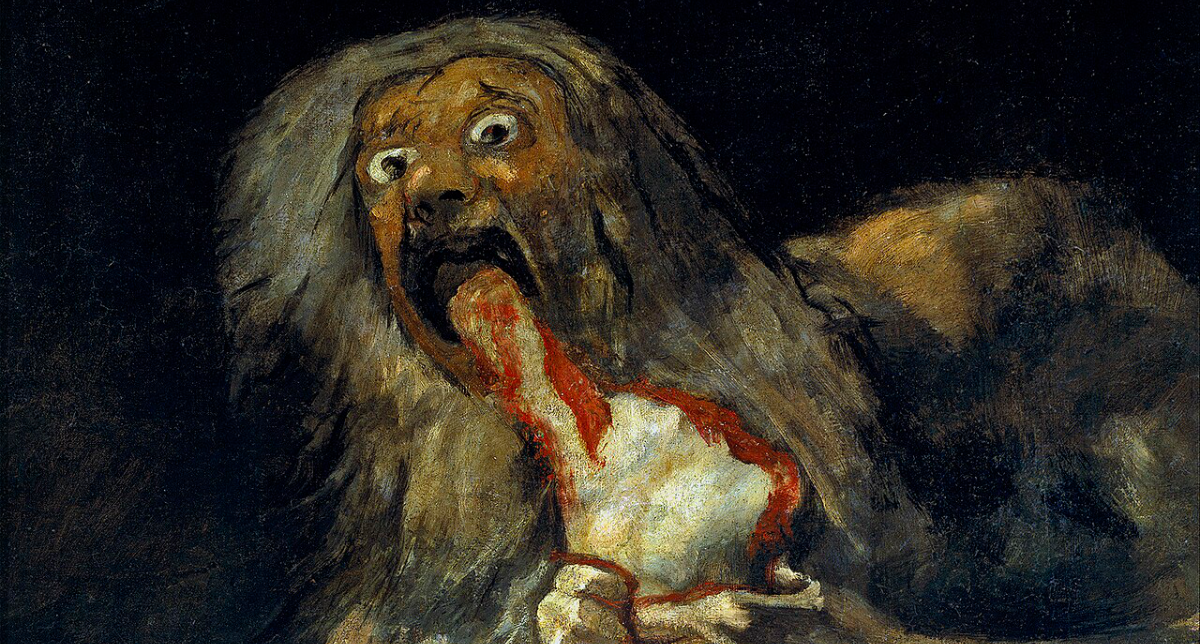
The Tech world's new, much-hyped technology, AI, is incapable of original thought. The current models reflect their training data and are currently incapable of self-improvement. The challenge this new technology faces, like all VC-funded projects, is that its value must exceed its investment by at least 10x. These models have already consumed the vast majority of available information; yet their value remains disappointing, given that 2025 saw $202 billion in funding with revenue of just $37 billion. The imperative now then, is to find new data, to find an inexhaustible resource of input that can be privatised and commercialised into 'better' models.
Like an infant learning from the world through sight and sound, so too must AI see and hear it as we do. This imperative is evident in the various AI hardware efforts seeking a foothold, such as Meta's Ray-Ban Glasses and OpenAI's rumoured pen, built in collaboration with former Apple designer Jony Ive. These products are marketed as providing a second brain that enables users to take notes on their daily lives. That is not their primary purpose, though they will happily accept payment for that service. The incentive for these companies is not to make your life slightly easier; their incentive is to extract any and all useful data from your life to improve their models.
Alongside these real-world instances of spyware, we are seeing a marked increase in investment in AI-powered construction technology, indicating a significant shift in the investment community's view of a traditionally underinvested field. Something has changed in the value proposition, and it isn't a better Revit. Prepare to be plundered, Creative, as these firms serenade you on how they are merely trying to make your low-margin life easier.
It is my belief that these new online platforms will extract every single bit of professional insight possible from you and ultimately, simulate your and every other creative's design process into one Architectural AI they can sell to developers. If you think that sounds crazy, what feels more exciting to an investor: "We are making a Revit killer", or "We are making a design app to extract data so we can train our models to sell Architectural services?" What would account for that sudden uptick in VC investment? Who has actual money? Who could you sell good enough to?
"What a paranoid little goblin you've become, Thomas." I hear you say. Well, I may be a goblin, but I have always been pragmatic when it comes to exchanging my data for a service that makes my life easier. But the terms of that contract have changed. These companies are not just selling your data to make money from targeted advertising (remember people getting angry about that?!), they are weaponising it against you to take your livelihood.
But it isn't all bad news. The reason these companies are suddenly popping up is not that they love the industry; it is because the construction industry is so bloody obtuse, so inaccessible.
The best AI can do at the moment is simulate the outward-facing renders of popular, well-referenced architects; it has no capability to reproduce what we actually do, because that part has traditionally been hidden.
As a student, I always looked towards the Tech utopia in wonder at how freely knowledge was shared among one another, in stark contrast to Architecture. Unfortunately, this has been their downfall, as Tech has shown it is more than happy to eat its own. Open access to knowledge is dead; AI has taken the goodwill of a few and privatised the knowledge for profit.
Architects and Landscape Architects have been given a chance to decide their fate out of sheer dumb luck. We can either use these online tools, exchanging convenience for our future. Or we can decide not to, to protect our livelihoods, feed our families, and keep providing real value and richness to the world. Tech has proven it is above the law. Even if your terms of service explicitly state that your data will not be used to train AI, those terms can and will be changed at any time. If these companies did use your data as they did with The New York Times, are you in a position to fight them? I would wager, no, you are not going to win a fight against OpenAI, little Creative.
Aaron Swartz believed in open access, a belief that information should be free and accessible to all. While I still agree with this, AI has ensured that those who share their knowledge, whether openly or "privately", will have their ideas extracted, privatised, and commercialised. A fact I'm acutely aware of as I communicate this to you now, in my voice, which will inevitably be consumed.
Until such time that legal precedent is set on the protection of IP in the training of AI, do the only thing you can do:
Get defensive, or prepare to be fucked.
If you want to talk through what getting defensive actually looks like for your specific situation, I can help. I'm not interested in your IP; I'm interested in saving Architecture. Book a meeting.